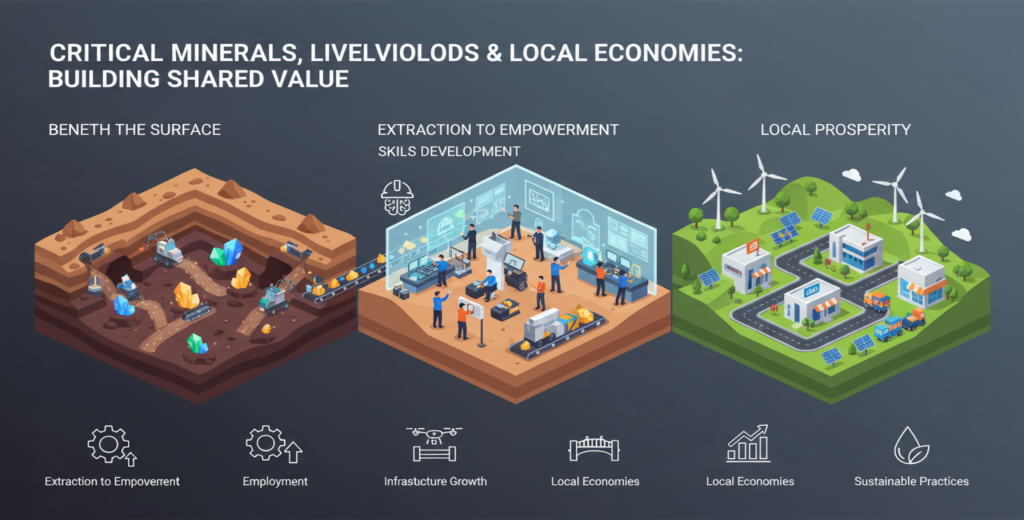
Beneath the Surface: The Story That Truly Matters There is something quietly transformative unfolding in the world of critical minerals. While headlines often focus on lithium, cobalt, nickel, graphite, and rare earth elements, the essential building blocks of electric vehicles, renewable energy systems, and advanced technologies, the real story runs much deeper. It is not only about what is extracted from the earth, but about what is built above it. Across regions rich in mineral resources, a new narrative is emerging, one that goes beyond extraction to focus on empowerment. Communities are g...
Read More
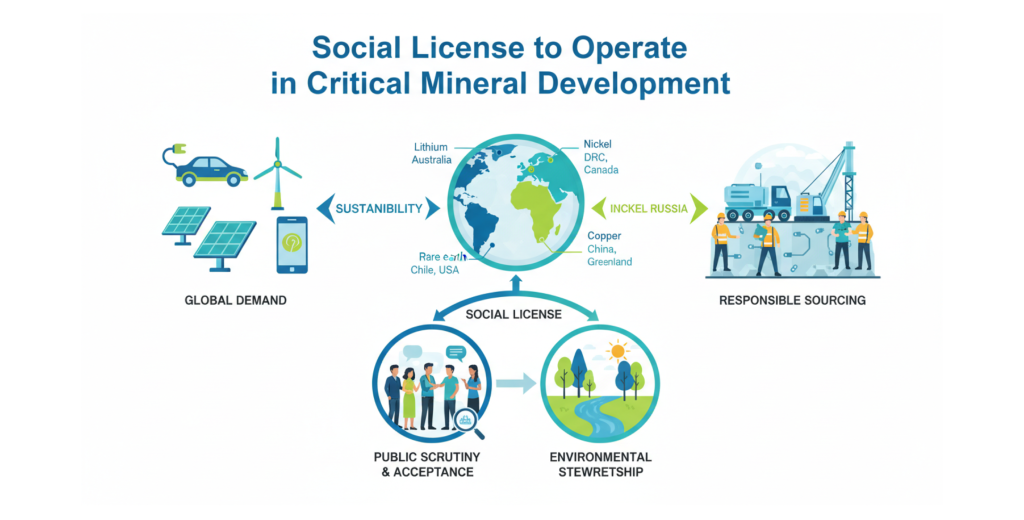
The Human Dimension of the Global Critical Minerals Race The global race for critical minerals is accelerating at an unprecedented pace. Resources such as lithium, cobalt, nickel, graphite, copper, and rare earth elements have become the backbone of modern industrial transformation. They power electric vehicles, renewable energy systems, advanced electronics, and next-generation defense technologies. As countries pursue aggressive decarbonization goals and energy transition strategies, demand for these minerals is projected to surge exponentially over the coming decades. Governments are streng...
Read More
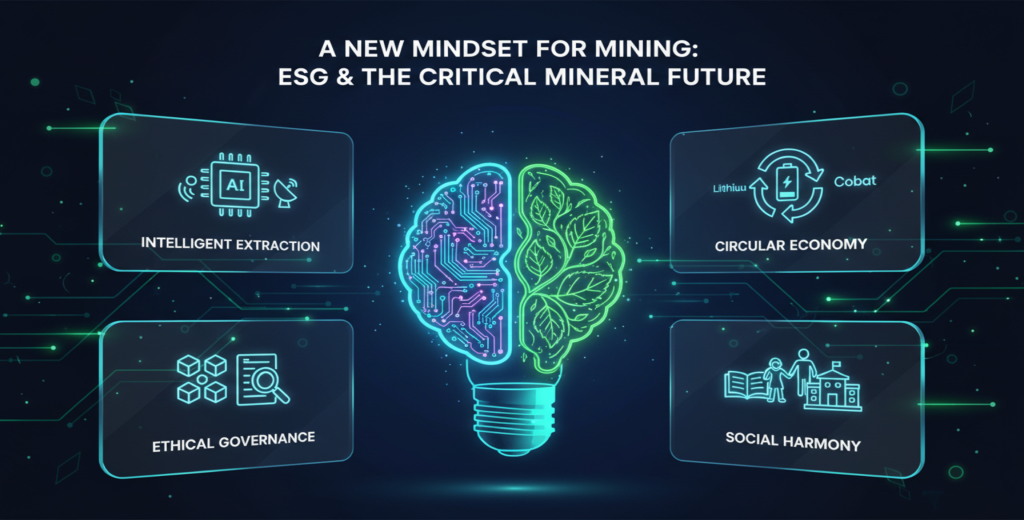
Across boardrooms, policy forums, and investor discussions worldwide, the phrase “responsible mining” has become a central theme in the global conversation about sustainability. Commitments such as carbon neutrality by 2040, zero harm operations, community-first engagement, and fully transparent supply chains increasingly appear in corporate strategies and sustainability reports. These ambitions reflect a growing recognition that the future of mining must align with environmental protection, social responsibility, and sound governance principles. Yet the real challenge lies not in announcing c...
Read More