In a world driven by innovation, sustainability, and digital transformation, the spotlight often falls on the technologies that reshape our lives; smartphones, electric vehicles, wind turbines, or solar panels. Yet, behind these breakthroughs lies an unsung foundation: critical minerals. These elements, though rarely part of public conversation, form the backbone of clean energy systems, advanced manufacturing, defense capabilities, and digital infrastructure.
As the world transitions toward a low-carbon economy and greater energy security, understanding the role of critical minerals is not optional; it is a necessity.
What Makes a Mineral “Critical”?
The term critical mineral is less about scarcity in the Earth’s crust and more about their strategic importance and supply chain vulnerability . Two key factors define their criticality:
1. Economic Significance – Minerals essential to industries like aerospace, defence, electronics, healthcare, and renewable energy.
2. Supply Chain Risk – Minerals whose extraction or processing is geographically concentrated, leaving them vulnerable to geopolitical shifts, trade disputes, or market fluctuations.
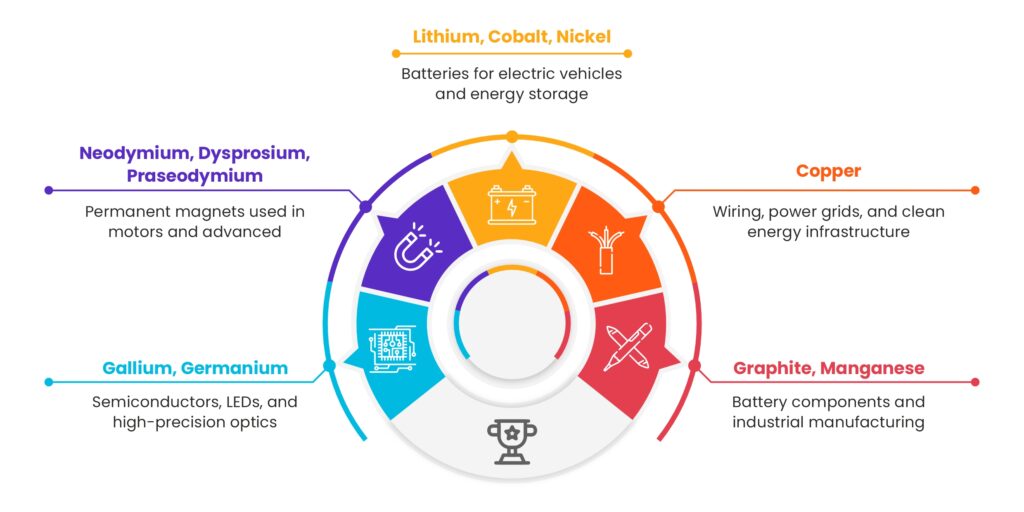
Some of the most frequently listed critical minerals include lithium, cobalt, nickel, rare earth elements, graphite, and titanium; all vital to future-ready industries.
Unlike oil wells or solar farms, the mining and refining of critical minerals rarely capture public imagination. However, their absence would halt the world’s progress. They are the silent forces that enable electrification, decarbonization, and digital connectivity.
Without lithium and cobalt, batteries cannot power electric cars or store renewable energy. Without rare earth elements, wind turbines, medical imaging devices, and advanced defense systems would fail. Without copper, no global energy grid could function.
Simply put; critical minerals are the invisible bridge between raw resources and refined innovation.
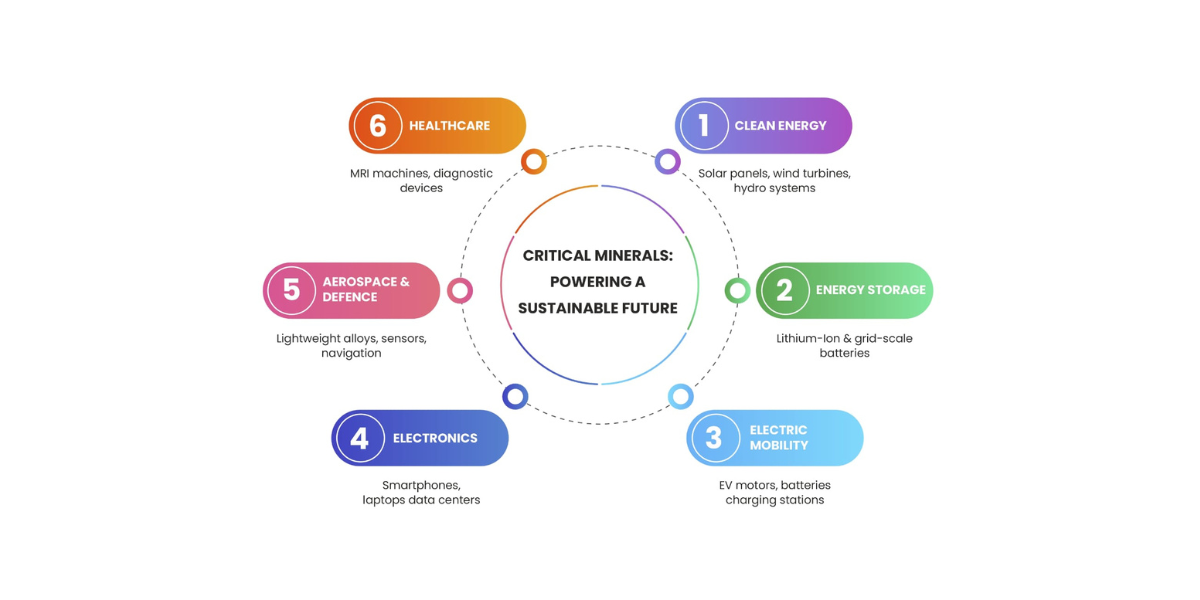
Today, critical minerals are at the heart of some of the most pressing global transitions
· Clean Energy Transformation – Electric vehicles require up to six times more mineral input than conventional cars. Wind turbines depend on rare earth magnets, while solar panels rely on silicon and copper.
· Energy Storage & Reliability – Lithium-ion and flow batteries depend on minerals like lithium, cobalt, vanadium, and nickel to stabilize power grids and ensure renewable energy reliability.
· Electric Mobility – Rare earth-based permanent magnets drive EV motors, while charging infrastructure demands vast amounts of copper. With EV adoption growing rapidly, mobility is becoming a mineral-intensive sector.
· Digital Connectivity – Smartphones, semiconductors, data centers, and 5G rely on gallium, germanium, tantalum, and gold. Without them, the digital economy collapses.
· Aerospace & Defense – Titanium, nickel, and cobalt-based alloys power jet engines, while rare earths strengthen radar, communication, and navigation systems.
· Healthcare Advancements – MRI scanners, implants, and surgical devices rely on niobium, titanium, tungsten, and rare earth elements for precision, durability, and safety.
Every modern industry is intertwined with critical minerals, making them more than commodities; they are strategic assets.
Supply Chain Challenges Ahead
The demand for critical minerals is projected to multiply several-fold by 2040 as clean energy systems and electrification expand. However, supply chains remain concentrated and fragile.
For example:
• Over 60% of cobalt production comes from the Democratic Republic of Congo.
• China currently dominates the processing of rare earth elements.
• Lithium refining is heavily concentrated in a few countries, creating supply risks.
This imbalance makes the world highly vulnerable to disruptions, price volatility, and
geopolitcal tensions. To build a secure and sustainable future, the industry must diversify
supply, invest in recycling technologies, and create transparent global cooperation frameworks.
From Silent to Strategic: The Way Forward
The time has come to recognise critical minerals not as silent enablers, but as strategic drivers of innovation and sustainability. Governments, industries, and innovators must:
• Integrate mineral awareness into technology design and energy planning.
• Foster responsible sourcing practices that prioritize ethics and sustainability.
• Encourage interdisciplinary collaboration across geology, engineering, economics, and environmental sciences.
• Invest in recycling and circular economy models to reduce dependency on virgin extraction.
The International Centre of Excellence in Mining (iCEM) is at the forefront of addressing these
challenges. More than a research hub, iCEM is a leadership and knowledge center dedicated to
driving responsible, innovative, and future-ready approaches to mineral development.
Through:
• Resource Diversification & Infrastructure Investment – Enhancing domestc and
international supply resilience.
• Technology & Recycling Innovation – Advancing material science, mining efciency, and
sustainable processing.
• International Cooperation – Building transparent, ethical, and resilient global mineral
value chains.
iCEM positions itself as a catalyst for the transition toward a secure, low-carbon, and
innovation-driven economy.
Looking Ahead
Critical minerals may work silently, but their impact is loud, profound, and indispensable. As
the world races toward clean energy, digital transformation, and advanced mobility, these
resources will defne the pace and success of global progress.
At iCEM, the mission is clear: to not only acknowledge these silent forces but also to harness them
responsibly, ensuring they remain the cornerstones of innovation, sustainability, and resilience
in the decades to come