Fueling Innovation
for Excellence
Fueling Innovation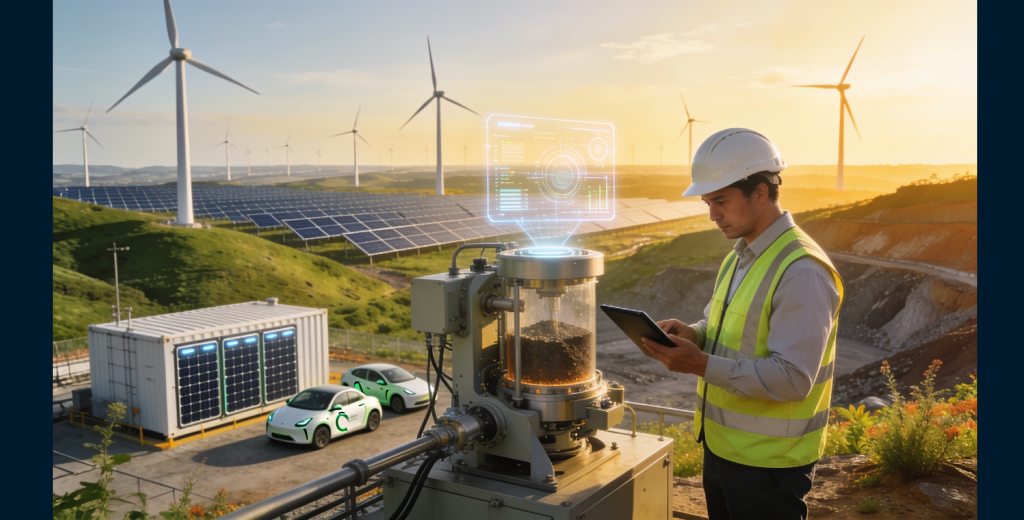
The technologies shaping our future, from electric vehicles and wind turbines to solar panels, grid-scale batteries, smartphones and data centres, depend on a reliable supply of minerals. Lithium, cobalt, nickel, copper, graphite and rare earth elements are essential to many of these technologies. As the world transitions towards cleaner energy and more digital infrastructure, mining has become an important part of the conversation about sustainability.
This creates both an opportunity and a responsibility for the mining sector. Meeting rising mineral demand must go hand in hand with protecting ecosystems, using resources efficiently, safeguarding workers and creating lasting value for communities. The future of mining will therefore depend not only on how much is produced, but also on how responsibly minerals are explored, extracted, processed, reused and managed throughout their life cycle.
From Mineral Availability to Supply-Chain Resilience
The global discussion around critical minerals is evolving. The challenge is no longer simply whether sufficient resources exist, but also whether supply chains are diverse, dependable, and resilient. Processing and refining capacity remains concentrated in a limited number of regions, creating potential vulnerabilities for industries that depend on critical minerals.
This shift creates space for innovation and collaboration. Countries and organisations that invest in exploration, advanced processing, recycling, research and skilled workforces can strengthen supply security while building domestic capabilities. For India, this is an opportunity to develop a more resilient mineral value chain from geological exploration and extraction to refining, manufacturing and recovery of materials from products at the end of their useful lives.
India’s Growing Critical-Minerals Ecosystem
India has taken several steps to strengthen its critical-minerals ecosystem. The National Critical Minerals Mission, launched in January 2025, brings together exploration, processing, recycling and financing with the broader objective of improving self-reliance. The source material also highlights a record 212 mineral-block auctions in FY2025–26 and the operationalisation of 36 mines, including 28 greenfield projects.
Alongside mining, investment in downstream capabilities is important. Four critical mineral processing parks are being developed in Andhra Pradesh, Gujarat, Odisha and Maharashtra. A ₹7,280-crore scheme aims to establish integrated rare-earth permanent-magnet manufacturing capacity of 6,000 tonnes per annum, with domestic production targeted to begin by the end of 2026. The Union Budget 2026–27 also announced Rare Earth Corridors in Odisha, Kerala, Andhra Pradesh and Tamil Nadu to support mining, processing, research and manufacturing.
Recycling is another part of this strategy. A ₹1,500-crore incentive scheme for FY2026–31 supports recovering critical minerals from electronic waste, lithium-ion battery scrap, catalytic converters, and end-of-life vehicles. Together, these initiatives point towards a broader approach: secure access to minerals, add value within the country, and reduce avoidable material loss. Policy announcements and targets, however, must be matched by effective implementation, transparent oversight and measurable environmental and social outcomes.
Four Pillars of Sustainable Mining
1. Innovation and technology
Digital tools can make mining more precise, efficient and safer. Artificial intelligence, remote sensing, automation, drones, digital twins and real-time monitoring can support geological modelling, equipment maintenance, production planning and hazard detection. Automation can also reduce the need for workers to enter high-risk areas. Technology delivers lasting benefits when it is supported by reliable data, cybersecurity, appropriate maintenance and training for the people who use it.
2. Circularity and recycling
Minerals should be treated as valuable materials that can remain in circulation for as long as possible. Recovering metals from discarded electronics, used batteries, industrial residues and end-of-life equipment can supplement primary mining and reduce waste. Recycling cannot replace all new extraction, particularly as demand grows and collection systems remain uneven, but it can improve resource efficiency and create new business opportunities. Designing products for repair, reuse and easier material recovery can strengthen this circular approach.
3. Responsible operations and environmental stewardship
Sustainable mining requires careful management of water, energy, waste, tailings, dust, noise and biodiversity. Practical measures include improving water efficiency, reusing process water where feasible, adopting cleaner energy, monitoring air and water quality, maintaining robust tailings-management systems and progressively restoring disturbed land. Environmental planning should begin before operations start and continue through closure and post-closure monitoring. Clear responsibilities, independent oversight and transparent reporting help turn commitments into measurable performance.
4. People, skills and safety
Technology succeeds only when people can use it safely and effectively. Mining’s future workforce will need a combination of operational knowledge, digital literacy, automation skills, environmental awareness and strong safety practices. Continuous training, leadership accountability and a culture in which workers can report hazards without fear are essential. Sustainable development also means engaging communities early, listening to local concerns, respecting livelihoods and ensuring that economic opportunities and social investments respond to local priorities.
Collaboration Is Essential
No single organisation can build a sustainable mining future alone. Governments establish policy and regulatory frameworks; industry invests and applies technology at scale; universities and research centres test ideas; and training institutions prepare the workforce. Partnerships can help translate research into practical solutions and make expertise accessible across the value chain.
The Australia–India Critical Minerals Research Hub is one example of collaboration in exploration, extraction, processing and recycling. Such initiatives can help build technical capability, support knowledge exchange and encourage solutions suited to local geological, operational and environmental conditions. Collaboration is most effective when it includes clear goals, practical testing, shared learning and transparent evaluation of results.
Growth That Benefits Everyone
The success of sustainable mining should be measured through more than production volumes and financial performance. Reliable mineral supplies can support clean energy, electric mobility and modern infrastructure. Mining and its associated industries can also create skilled employment in exploration, operations, processing, maintenance, safety, digital systems and recycling. Local businesses may benefit when projects invest in skills, procurement and long-term partnerships.
These benefits are not automatic. They depend on responsible conduct, effective regulation, meaningful community engagement and credible systems for managing environmental and social impacts. Strong safety performance, fair working conditions, transparent communication, water stewardship, biodiversity protection and planned mine closure all contribute to public trust. Operations that earn the confidence of communities, regulators, employees and investors are better positioned to build durable relationships and operate responsibly over time.
iCEM: Building Capability for the Future
The International Centre of Excellence in Mining Safety & Automation (iCEM), an initiative of Gujarat Mineral Development Corporation (GMDC), contributes to this transition by bringing together technology, skills development, training and collaboration. Its campus near Ahmedabad focuses on identifying innovations and building capabilities for a safer, more technology-enabled and climate-conscious mining sector.
iCEM’s partnerships reflect this collaborative approach. It has signed a memorandum of understanding with Monash University in support of the Australia–India Critical Minerals Observatory and has partnered with TEXMiN at IIT (ISM) Dhanbad to evaluate technologies. It has also delivered occupational health and safety training for employees of GMDC’s mining partners at mine sites across Gujarat and shared knowledge about critical minerals with wider audiences.
By connecting industry needs with research, practical training and technology evaluation, iCEM can help strengthen the skills and capabilities required for responsible growth. Continued collaboration among mining companies, academic institutions, technology providers, workers and communities will be essential to turning promising ideas into operational improvements.
Looking Ahead
The future of sustainable mining will be shaped by the choices made today: how minerals are sourced, how efficiently they are used, how workers and communities are treated, and how environmental impacts are prevented and managed. India’s growing focus on critical minerals creates an opportunity to combine domestic capability with innovation, circularity and strong environmental and social practices.
A successful transition will require more than new equipment or policy announcements. It will require measurable targets, transparent reporting, skilled people, responsible investment and accountability throughout the mineral value chain. When innovation is matched with safety, environmental stewardship and shared benefits, mining can help supply the materials needed for the energy transition while contributing to a more resilient and inclusive economy.
Frequently Asked Questions (FAQs)
What is sustainable mining?
Sustainable mining is the responsible exploration, extraction, processing and management of minerals while reducing environmental harm, protecting workers, engaging communities and supporting long-term economic value.
Why are critical minerals important for the energy transition?
Minerals such as lithium, nickel, cobalt, copper, graphite and rare earth elements are used in batteries, electric vehicles, renewable-energy systems, power networks and other modern technologies. Reliable supply is important for these industries to grow.
Can recycling eliminate the need for new mining?
No. Recycling can recover valuable materials and reduce pressure on primary resources, but it cannot meet all demand on its own, especially while demand is growing and many products have not yet reached the end of their useful lives. Responsible mining and stronger recycling systems will both remain important.
How can technology make mining safer and more efficient?
AI-enabled monitoring, remote sensing, automation, drones and predictive maintenance can improve planning, detect hazards and reduce exposure to dangerous tasks. These tools must be supported by training, sound procedures and effective oversight.
What are the main environmental priorities for a mine?
Key priorities include responsible water and energy use, safe tailings and waste management, dust and emissions control, biodiversity protection, land rehabilitation, and planning for mine closure and post-closure monitoring.
How is India strengthening its critical-minerals sector?
Initiatives described in this article include the National Critical Mineral Mission, mineral-block auctions, proposed processing parks, rare-earth magnet manufacturing support, Rare Earth Corridors and incentives for recovering minerals from waste streams.
What role does iCEM play in sustainable mining?
iCEM, an initiative of GMDC, supports capability-building through training, technology evaluation, research partnerships and occupational health and safety programmes for the mining sector.
How should progress in sustainable mining be measured?
Useful measures include worker safety, water and energy intensity, emissions, waste and tailings performance, land rehabilitation, biodiversity outcomes, community feedback, workforce development and transparent compliance reporting, not production alone.
19 Oct, 2026