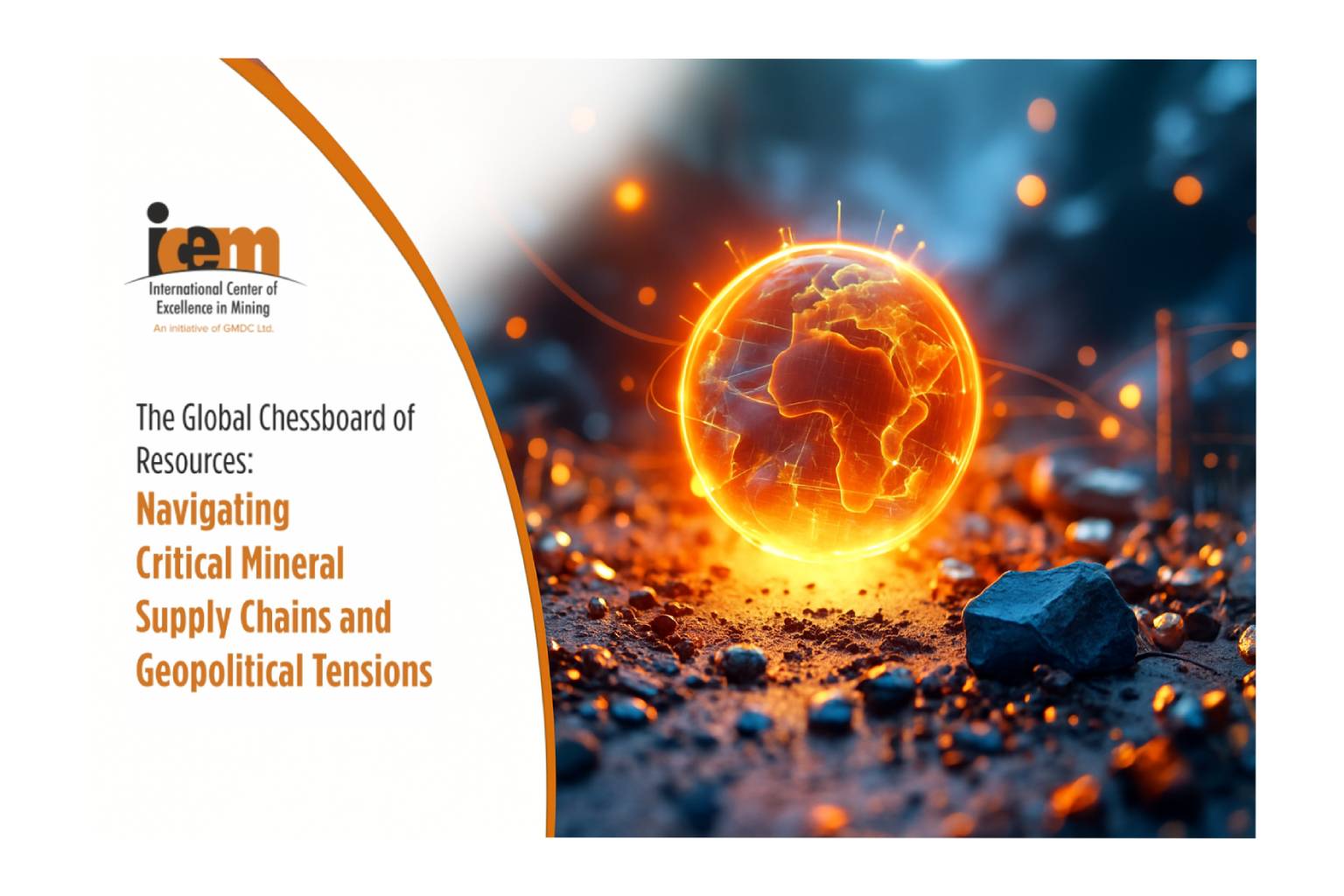
In today’s technology-driven world, critical minerals have become the invisible currency of global power. From lithium in EV batteries to rare earth elements in defense systems and semiconductors, these resources fuel clean energy transitions, digital infrastructure, and advanced manufacturing.
But behind this progress lies fragility. Supply chains are concentrated in a handful of countries, leaving them vulnerable to geopolitical tensions, export restrictions, and environmental challenges. As nations race to secure access, the competition for critical minerals is reshaping global alliances, industrial strategies, and the very architecture of economic resilience.
 |
Global demand for critical minerals is surging, making secure access a strategic imperative. The International Energy Agency (IEA) warns: |
“Disruptions in critical mineral supply can have major impacts on technology prices, inflation, manufacturing competitiveness, and the broader economy.”
Between December 2023 and February 2025, China imposed export controls on minerals like gallium, germanium, graphite, tungsten, indium, and tellurium-all vital for semiconductors, EV batteries, and defense technologies. These restrictions triggered global alarm, exposing just how fragile supply chains have become.
 |
The concentration of mineral processing in a few countries-especially China-creates enormous geopolitical leverage. A striking example came in 2010, when China halted rare earth exports to Japan during a diplomatic dispute. Prices spiked tenfold in just a week, disrupting industries worldwide. |
Today, renewed export controls raise the risk of similar crises. Nations are now prioritizing supply diversification and resilience, not only for economic competitiveness but also for national security.
 |
India’s ambition of reaching 500 GW of non-fossil fuel capacity by 2030 depends heavily on imports of lithium, cobalt, and are earths. With China dominating rare earth processing and countries like Indonesia and Chile limiting nickel and lithium exports, India faces pressing vulnerabilities. |
Restrictions on minerals such as graphite could raise EV battery costs by up to 45%, particularly in the U.S. and Europe where production is already 40–50% more expensive than in China. This could widen the cost gap to nearly 70%, threatening competitiveness, and consumer affordability.
The semiconductor shortage during the pandemic is a cautionary tale-similar disruptions in critical minerals could stall clean energy transitions , hinder technological innovation , and delay climate goals.
Environmental challenges further complicate the picture. Mining operations face strict regulations due to pollution and carbon emissions. Many countries also lack the infrastructure or technology for large-scale mineral processing, leaving control in the hands of a few dominant players.
| . . | 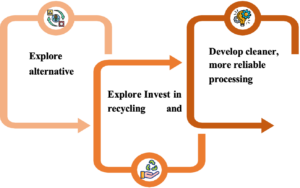 |
To future-proof supply chains, governments, industries, and companies must work together to:
| • | Diversify sourcing and explore alternative reserves |
| • | Invest in recycling, circular economy models, and urban mining |
| • | Develop cleaner, more reliable mineral processing technologies |
| • | Strengthen international collaborations and strategic reserves |
Dedicated institutions will be crucial. The International Centre of Excellence in Mining Safety & Automation (iCEM) is one such initiative, advancing India’s journey toward a secure, technologically advanced, and environmentally responsible mining ecosystem.
Critical minerals are no longer just raw materials – they are strategic assets shaping the future of economies, energy, and security. The race to secure them will define global partnerships, industrial growth, and sustainability.
For India and the world, the challenge lies in building resilient, diversified, and sustainable supply chains that can withstand geopolitical shocks while powering the technologies of tomorrow.
Q1. What are critical minerals and why are they important?
Critical minerals are natural resources like lithium, cobalt, nickel, and rare earth elements that are essential for clean energy technologies, EV batteries, semiconductors, and defense systems. They are vital for global energy transition and economic security.
Q2. Why are critical mineral supply chains vulnerable?
Most mineral extraction and processing are concentrated in a few countries, especially China. This concentration creates geopolitical risks, making supply chains vulnerable to export restrictions, trade disputes, and political instability.
Q3. How do export restrictions impact global industries?
Restrictions on minerals such as graphite or rare earths can significantly increase costs for EV batteries, semiconductors, and renewable technologies, leading to higher consumer prices, reduced competitiveness, and slower innovation.
Q4. What is India doing to secure critical minerals?
India has launched the National Critical Mineral Mission (NCMM), introduced 2025 license auctions, and expanded urban mining & e-waste recovery. Policy reforms like amendments to the Mines and Minerals (Development and Regulation) Act also aim to attract investments and build resilience.
Q5. How can industries and governments build sustainable supply chains?
Resilience can be built by diversifying sources, investing in recycling and urban mining, developing cleaner processing technologies, and fostering global partnerships. Institutions like iCEM play a key role in advancing sustainable mining practices.
Q6. What role do critical minerals play in the clean energy transition?
Critical minerals are the backbone of renewable technologies—from EV batteries and wind turbines to solar panels and smart grids. Without secure and sustainable mineral supply chains, achieving climate goals will be delayed.
10 Sep, 2025