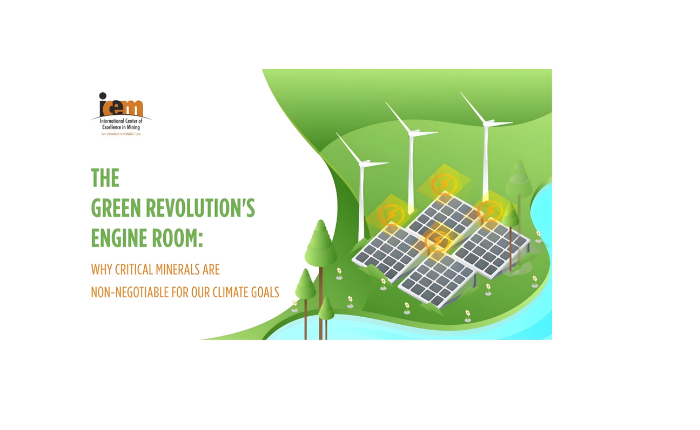
When we imagine the future of clean energy, we often picture wind turbines spinning gracefully, solar panels shimmering under the sun, and electric vehicles gliding silently across city streets. Yet, behind these icons of progress lies a less visible but indispensable foundation-critical minerals.
The transition to renewable energy is not just an engineering challenge; it is fundamentally a materials challenge. Every solar panel, wind turbine blade, and EV battery depends on a unique mix of elements that are scarce and unevenly distributed across the globe. These minerals are the unsung heroes of the green revolution, and without securing their supply, our climate goals remain out of reach.
Clean energy technologies demand significantly more raw materials than traditional fossil fuel systems. The International Energy Agency (IEA) projects that by 2050, global demand for critical minerals could increase sixfold. This surge is driven both by the sheer scale of renewable deployment and the material intensity of these technologies.
Critical minerals share three defining traits:
• Indispensable for modern technology
• Difficult to substitute
• Challenging to source and process
Key minerals for the clean energy transition include:
• Lithium – “White gold” for energy storage, vital for EVs and grid-scale batteries that balance intermittent solar and wind power.
• Cobalt – Enhances battery performance and durability, but its supply is concentrated in limited geographies, creating vulnerabilities.
• Copper – With unmatched conductivity, it is essential for power generation, transmission, and storage.
• Nickel – Crucial in advanced battery chemistries, with demand surging alongside EV adoption.
• Rare Earth Elements (REEs) – Critical for permanent magnets in wind turbines and EV motors. Despite their abundance in Earth’s crust, their extraction and processing are complex and geopolitically concentrated.
These minerals form the building blocks of clean energy systems. Without them, renewable technologies cannot function.
The clean energy shift is rewriting global mineral dynamics. For instance, EVs require several times more lithium, nickel, and cobalt than conventional vehicles. As adoption accelerates, mineral demand will intensify, creating both opportunities and risks.
Resource-rich nations and mining companies stand to benefit, but risks such as supply chain disruptions, environmental challenges, and geopolitical tensions could derail progress if left unchecked.
Unlike oil, which is relatively widespread, critical minerals are heavily concentrated in a few regions. This creates strategic dependencies and new geopolitical realities.
China currently dominates mineral processing and refining, even when raw materials are mined elsewhere. It controls:
• 60% of global rare earth production • A majority share of lithium processing
• Significant portions of battery and solar panel manufacturing
Such concentration has triggered global concerns about supply security, pushing governments to prioritize mineral access as a matter of national strategy.
The irony of the green transition is that it can damage the environment if resource extraction is mismanaged. Mining in ecologically fragile or water-stressed regions presents serious challenges:
• Water stress: Lithium extraction from South American salt flats consumes vast amounts of water, threatening ecosystems and local communities.
• Labor concerns: In the Democratic Republic of Congo, cobalt mining has faced global criticism for unsafe working conditions and child labor.
Sustainable mining, transparency, and ethical sourcing are therefore non-negotiable. Companies and governments must integrate these principles to ensure the green transition does not come at the expense of people or the planet.
The race to secure critical minerals is fueling innovation across the supply chain:
• Battery breakthroughs: New chemistries reduce reliance on scarce minerals like cobalt while improving performance.
• Recycling technologies: Capable of recovering up to 95% of valuable materials from end-of-life batteries and electronics.
• Urban mining: Cities, rich in e-waste, offer an efficient and less environmentally damaging mineral source.
• Substitution research: Exploring alternatives to rare earths and discovering new storage materials.
Such solutions will be key to building a resilient, circular, and sustainable mineral ecosystem.
As global demand intensifies, India is positioning itself as a strategic player through initiatives developed under iCEM and GMDC; driving sustainable mineral development by:
• Infrastructure Advancement – Building state-of-the-art labs, pilot plants, and testing facilities to fast-track mineral processing innovations.
• Strategic Collaborations – Partnering with industry leaders to accelerate market-ready, techno-commercial solutions.
• Capability Building – Designing awareness, training, and certification programs to prepare a skilled workforce for the evolving mining sector.
To achieve its ambitious renewable targets, India must secure reliable access to critical minerals.
This requires:
• Scaling sustainable domestic production
• Ensuring ethical and transparent supply chains
• Expanding recycling and circular economy models
• Investing in innovation and substitution research
By responsibly harnessing resources like lithium, cobalt, copper, and rare earths, India can not only meet its clean energy goals but also emerge as a global leader in sustainable and resilient mineral strategy.